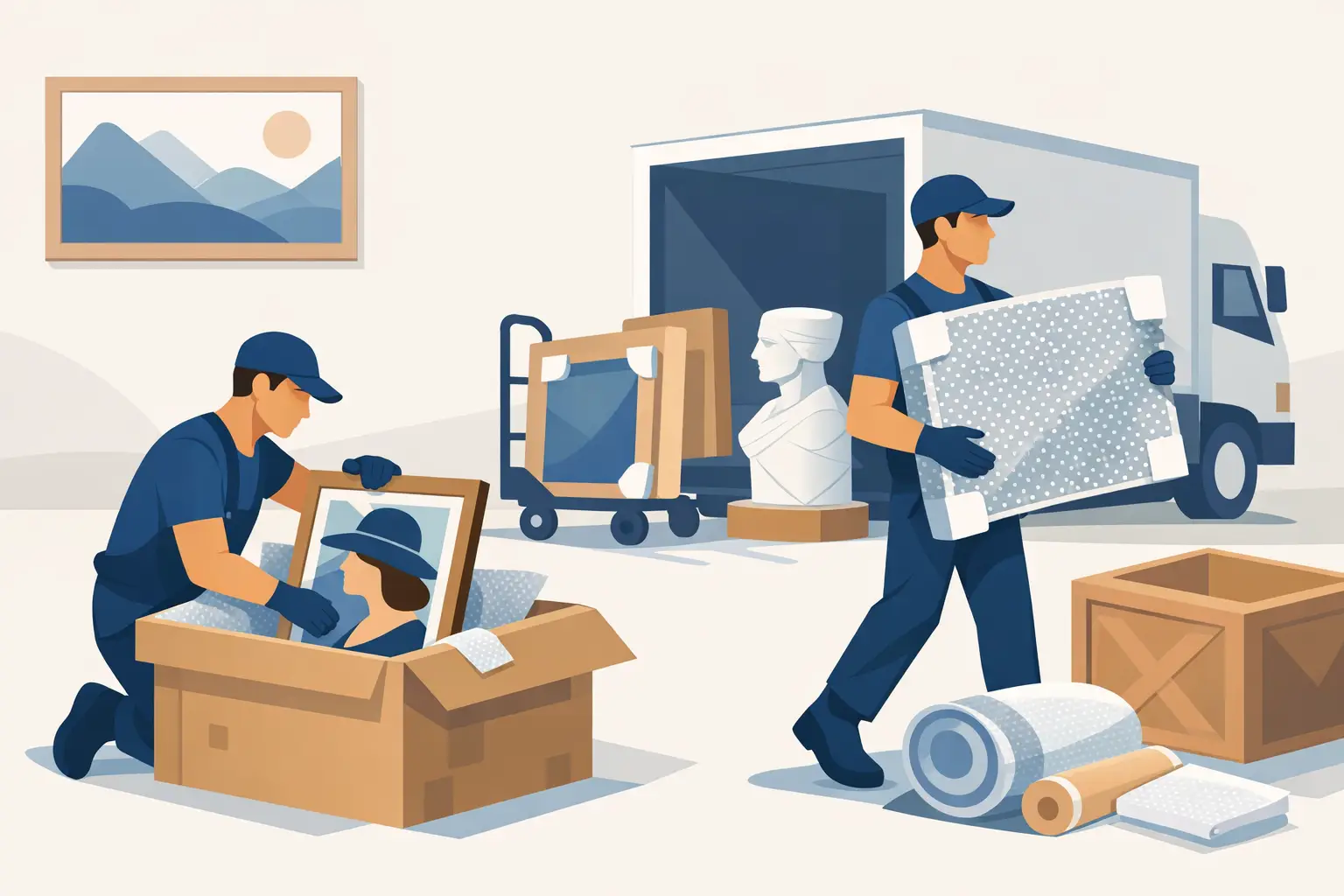
A framed oil painting can survive decades on a wall and still get damaged in ten minutes during a move. Most problems happen in the small moments – lifting from the wrong side, wrapping with the wrong material, stacking it flat in a truck, or exposing it to heat and moisture for too long. If you are figuring out how to move valuable artwork safely, the goal is not just getting it from one address to another. The goal is protecting condition, value, and peace of mind.
Fine art is different from standard household items because the risks are different. A sofa can take a bump. An original canvas, antique frame, or glass-covered piece often cannot. That is why artwork moves need planning before packing ever begins.
How to move valuable artwork safely starts with the right assessment
Before you touch a single piece, take inventory. Note the size, medium, frame type, glass or acrylic covering, and any existing wear. A stretched canvas has different needs than a sculpture, and a matted print under glass calls for a different packing method than an unframed work on paper.
Photos matter here. Take clear pictures of the front, back, corners, and frame details before packing. This helps with organization, insurance records, and condition tracking. If something is already loose, cracked, or fragile, you want that documented from the start.
This is also the point where many people underestimate risk. Smaller artwork is not always easier to move. A small, older piece with delicate glazing or a brittle frame can be more vulnerable than a large modern canvas. Value matters, but so does condition.
Use packing materials made for protection, not convenience
The fastest way to damage artwork is using everyday moving supplies without thinking about surface contact. Regular bubble wrap, newspaper, and old blankets may seem harmless, but they can leave marks, trap moisture, or create pressure points.
For most valuable art, start with acid-free glassine or another archival barrier where needed. This helps protect the artwork surface from abrasion and transfer. From there, build outward with padding, corner protectors, and rigid support. Frames need edge protection. Canvases need room to avoid pressure on the painted face. Glass-front pieces need extra stabilization because one crack can turn into internal damage quickly.
Boxes should fit the piece closely without squeezing it. Oversized cartons with too much empty space allow shifting. Boxes that are too tight create pressure where you do not want it. For higher-value pieces, custom crating is often the safer choice, especially for long-distance transport or pieces with antique frames, protruding details, or museum-level value.
A crate costs more than a standard box, but this is one of those areas where cheaper is not always smarter. If the artwork is hard to replace, highly sentimental, or financially significant, stronger protection usually pays for itself.
Handle artwork by structure, not by the most convenient grip
A lot of damage happens during lifting. People grab the top of a frame, press fingers against canvas, or carry a piece under one arm because it feels stable enough for a short distance. That is exactly when corner stress, tears, and frame separation happen.
Always handle framed artwork from the sides with clean, dry hands or gloves if appropriate. Never press against the painted surface. Never lift by the hanging wire. If glass is involved, keep the piece upright and controlled. Carrying from the bottom with support on both sides is usually safer than relying on one-handed grip points.
Large pieces need two people, even if one person thinks they can manage it. The issue is not only weight. It is balance, door clearance, stair turns, and sudden shifts. In apartment buildings and tight New York area hallways, awkward angles cause as much damage as rough handling.
Keep artwork upright during transport
One of the most common mistakes in residential moves is laying framed art flat in the truck. People do it to save space or to create a stack. The problem is that flat stacking increases the chance of pressure damage, frame stress, and broken glazing.
Artwork should usually travel upright, secured, and separated from heavy items. It should not sit where boxes can slide into it or where straps press directly against the face. Use padded barriers and make sure pieces cannot tip during braking or turning.
Truck placement matters too. Valuable artwork should not be packed as an afterthought once the truck is nearly full. It should be part of the loading plan. That means choosing a stable section of the truck, keeping it away from shifting furniture, and accounting for weather exposure during loading and unloading.
Heat, humidity, and cold can also affect artwork, especially older pieces, wood frames, and mixed-media works. A short local move is one thing. A long-distance move or a day with repeated truck openings is another. If conditions are extreme, transport timing and vehicle setup become more important.
When custom crating makes sense
Not every piece needs a crate, but some absolutely do. If the artwork is exceptionally valuable, unusually fragile, oversized, or being shipped a long distance, custom crating is often the right move. The same goes for sculptures, shadow boxes, antique mirrors, and pieces with fragile decorative frames.
A good crate is built around the piece, not forced around it. It limits movement, protects edges and surfaces, and adds a serious layer of defense against impact. It also helps when multiple parties are involved in transport or storage because the artwork is less exposed during handling.
This is where experience matters. Specialty movers understand how to crate different forms of art, how to distribute pressure safely, and how to load those crates properly. For customers moving in and out of Long Island, New York City, or surrounding areas, that level of planning can make a real difference, especially when elevators, stairs, and tight delivery windows are involved.
Insurance, valuation, and why paperwork matters
If you are moving valuable art, do not rely on assumptions about coverage. Basic moving valuation and full insurance are not the same thing, and artwork often falls into a category that deserves closer review.
Check what your homeowner’s policy covers during transit, what exclusions apply, and whether you need separate fine art coverage. If a piece has been appraised, keep that documentation accessible. If it has not, and the value is significant, getting an appraisal before a move may be worth it.
Paperwork is not exciting, but it matters. Keep an itemized list, dimensions, photos, and any certificates or provenance documents together and protected. If a piece has special unpacking or installation requirements, note those too. Good records reduce confusion and make it easier to manage claims if something goes wrong.
DIY versus professional art transport
Some artwork can be moved safely without specialty help. A durable framed print with low replacement value is one thing. A collection of original paintings, antiques, or glass-front pieces is another.
The real question is not whether you can move the art yourself. It is whether you can control the risks. Do you have the right materials, enough help, a safe vehicle setup, and time to pack properly? Are you carrying pieces through stairs, narrow hallways, or busy city buildings? Are you also trying to manage a full household move at the same time?
That is where professional handling often makes sense. A licensed and insured mover with fine art experience can provide packing, custom protection, careful loading, transport planning, and in some cases storage or receiving support. Companies like Lowlow Shipping often help customers who want one team handling both the main move and specialty items instead of splitting the job across different vendors.
There is a cost trade-off, of course. Professional art handling costs more than wrapping it yourself. But for high-value pieces, the bigger expense is damage, loss of value, or avoidable stress.
Unpacking deserves the same care as packing
The move is not over when the truck arrives. Unpacking too quickly can undo all the careful work that came before it. Bring artwork inside, let it adjust if temperatures are very different, and open protective materials carefully.
Do not use blades aggressively near canvas, paper, or frame edges. Inspect each piece as it comes out. Compare it with your pre-move photos and make note of any changes right away. If the artwork is going into storage instead of onto the wall, make sure that space is dry, stable, and appropriate for sensitive materials.
If you plan to hang pieces immediately, avoid rushing placement. A secure wall location matters just as much after the move as before it. Heavy frames, mirrors, and large works need proper mounting support.
Moving valuable art safely comes down to patience, materials, and judgment. The less you improvise, the better your odds. When a piece matters enough that replacing it is not really an option, careful handling is not extra effort – it is the job.