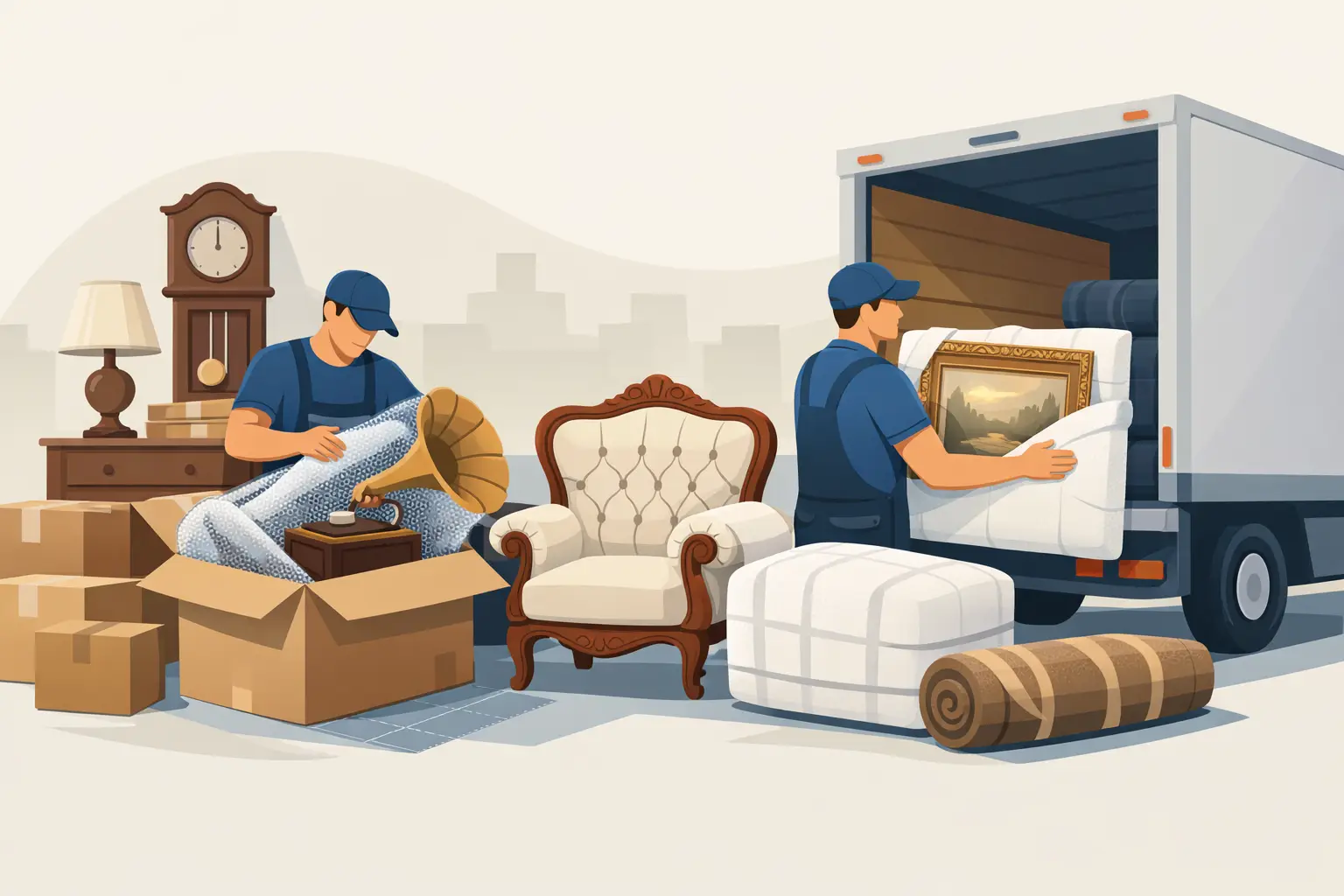
A cracked veneer panel, a loosened chair joint, a chipped marble top – antique damage usually happens in the small moments. It happens when a piece is lifted from the wrong point, wrapped with the wrong material, or loaded next to something that shifts in transit. The best way to move antiques is to plan for those small risks before the truck is ever loaded.
Antiques are not just old furniture. They often have dried wood, fragile finishes, hand-cut glass, delicate carvings, uneven weight distribution, and repairs from decades ago that may not be visible at first glance. That is why moving them safely takes more than blankets and good intentions. It takes the right packing methods, the right handling technique, and the judgment to know when a standard move becomes a specialty move.
What makes antiques harder to move?
Age changes materials. Wood can become brittle. Glue joints can weaken. Veneer can lift. Metal hardware can loosen. Upholstery can tear more easily than it looks like it should. A dresser that seems solid may have hidden stress in the legs, and a mirror attached to a frame may not tolerate vibration the way a newer piece would.
There is also the issue of value. Some antiques carry high resale value, but even pieces with modest market value can have strong family or sentimental importance. That changes the stakes. If a newer side table gets scratched, it is frustrating. If a grandfather clock passed down through three generations is damaged, it is something else entirely.
Because of that, the best approach is rarely the fastest one. It is the method that reduces pressure, limits movement, and protects the most vulnerable parts of each piece.
The best way to move antiques starts with assessment
Before anything gets wrapped, each item should be evaluated on its own. A marble-top table needs a different plan than a carved wood armoire. A china cabinet with curved glass needs a different strategy than an antique desk with removable drawers.
Start by identifying three things – what the piece is made of, where it is weakest, and whether any part can be safely removed. Shelves, glass panels, mirror tops, marble slabs, drawers, doors, and hardware often need separate protection. In many cases, removing those components lowers the chance of breakage and makes lifting safer.
Condition matters just as much as design. If a chair already wobbles, carrying it by the arms can make the problem worse. If a cabinet door does not close properly, it needs to be secured before transport. If a finish is delicate, direct contact with plastic wrap may cause sticking or surface damage. These are the details that shape the packing plan.
Packing antiques the right way
Packing is where many antique moves go wrong. People often overfocus on padding and underfocus on surface protection. Thick moving blankets help, but they should not be the first layer on a delicate piece.
For wood furniture, the finish needs protection from abrasion and moisture. Soft, non-staining wrapping materials are usually the safest first layer. After that, padding can be added to absorb bumps and pressure. Corners, carved details, legs, and feet should get extra attention because they take the most impact during handling.
Glass should be removed when possible and packed separately. Shelves, inserts, and mirror components should never be left loose inside a cabinet. They need to be wrapped, cushioned, and secured in a way that prevents shifting. Marble is especially risky because it is heavy, brittle, and prone to cracking if carried flat without proper support. It often needs custom handling and, in some cases, crating.
Drawers can be tricky. Some movers leave them in place for structure, while others remove them to reduce weight. It depends on the item. For a sturdy chest, keeping drawers in may be fine if they are secured. For a fragile piece with weak runners, removing and wrapping them separately may be safer.
Why crating is sometimes the safest option
Not every antique needs a crate, but some absolutely do. If a piece has high value, unusual dimensions, fragile glass, marble, or protruding decorative elements, crating may be the better choice. The same goes for long-distance transport, shared truck space, or storage situations where stacking pressure and movement are harder to control.
Crating adds cost, so it is not always necessary. That said, the trade-off is straightforward. You spend more upfront to reduce the chance of much more expensive damage later. For many families and collectors, that is a practical decision, not an excessive one.
A good crate is built around the item, not just around its general size. Interior support matters. If the piece can shift inside the crate, the crate does not solve the problem.
Lifting and carrying are where skill matters most
A lot of antique damage happens after packing, not before. The reason is simple – antiques often cannot be handled the way newer furniture can. You cannot grab a side chair by the top rail, tilt a cabinet by a decorative edge, or carry a drop-leaf table by its leaves and expect it to be fine.
Pieces should be lifted from their strongest structural points. Weight should be balanced, and the route out of the home should be cleared in advance. Tight hallways, apartment stairs, and narrow NYC building entries make this even more important. If the item needs to be angled, turned, or hoisted, the move should be planned before anyone puts hands on it.
This is where experience makes a real difference. A team that handles specialty items regularly knows how to spot risk early. They know when a piece needs extra manpower, when hardware should come off, and when standard equipment is not enough.
Truck loading can protect or ruin an antique move
Even perfectly packed antiques can be damaged by poor loading. Inside the truck, placement matters. Heavy items should never press against delicate antique surfaces. Pieces with legs or carved details should not carry the weight of surrounding furniture. Items need to be secured tightly enough to prevent movement but not strapped in a way that creates pressure points.
Climate can also matter. Extreme heat and humidity can affect wood, finish, glue, and upholstery, especially during longer moves or storage periods. That does not mean every antique requires climate-controlled transport, but some do. If the item is highly sensitive, very valuable, or traveling a long distance, it is worth discussing.
DIY versus professional antique moving
For a small, sturdy antique with no glass and no major value, a careful DIY move may be realistic. If you have the right materials, enough help, and a short travel distance, it can work. But many people underestimate how quickly a manageable item becomes risky once stairs, tight corners, or loading come into play.
Professional moving is usually the better choice when the antique is heavy, fragile, unusually shaped, or emotionally important. The same is true if the move includes apartment buildings, elevators, long-distance transport, or temporary storage. This is not only about labor. It is about having the packing materials, equipment, and handling experience to reduce avoidable risk.
A full-service mover with specialty item experience can also simplify the process. Instead of juggling packing, transport, and storage with separate providers, you get one coordinated plan. For customers moving across Long Island or through New York City, that can make a stressful job feel much more controlled.
Questions to ask before hiring help
If you are comparing movers, ask how they handle antiques specifically. General moving experience is helpful, but it is not the same as specialty transport. You want to know whether they pack antiques in-house, whether they offer custom crating, how they protect finishes, and whether they have moved similar items before.
It is also smart to ask about valuation coverage, truck setup, storage conditions, and whether they are licensed and insured. Clear pricing matters too. Antique moves can involve extra labor, special materials, and custom protection, so the estimate should reflect that upfront.
At Lowlow Shipping, this kind of planning is part of the job. When a move includes antiques, artwork, pianos, or other specialty items, the process should not feel improvised.
How to prepare your antiques before moving day
If you are getting ready for a move, take photos of each item before packing. Photograph existing wear, loose joints, finish marks, and hardware details. That creates a condition record and helps with reassembly if parts are removed.
You should also empty contents from desks, cabinets, and secretaries unless a mover specifically tells you otherwise. Lock or secure doors and drawers, but do not tape directly onto delicate finishes. If you know an item has a weak leg, a past repair, or a hidden issue, mention it early. Small information can prevent big problems.
The safest antique move usually looks a little slower and more deliberate than a standard move. That is a good sign. When valuable pieces are involved, speed is never the main goal. Care is.
If you are deciding on the best way to move antiques, think beyond getting them from one address to another. Think about how they are assessed, packed, lifted, loaded, and protected at every step. The right plan does more than prevent damage – it lets you settle into your new space with the pieces that matter most still intact.