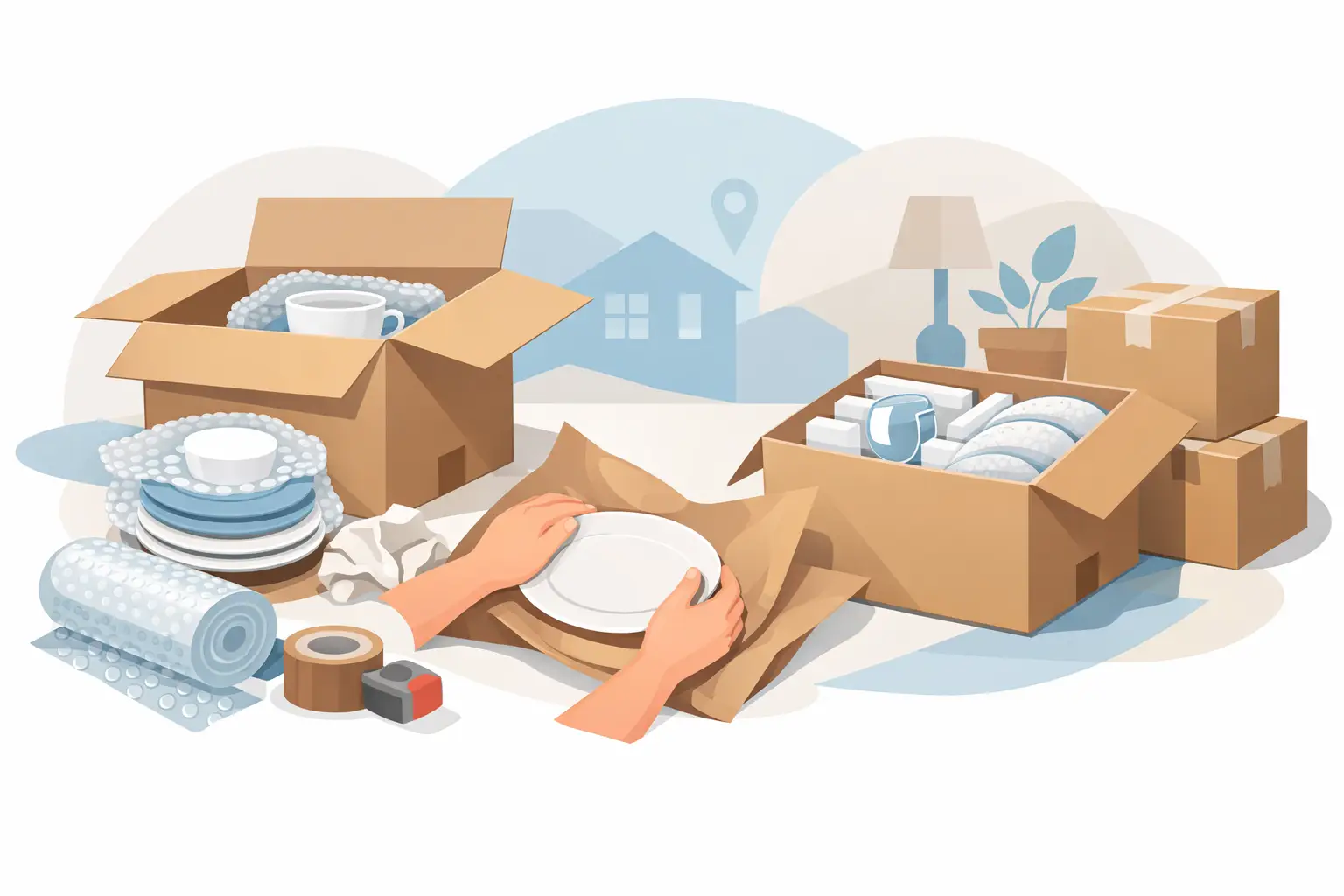
A chipped dinner plate is frustrating. A broken set of wedding china or a family serving platter can feel far worse. Knowing how to pack fragile dishes correctly is less about using an excessive amount of tape and more about stopping movement inside every box. Each dish needs a protective layer, each box needs a stable base, and every empty space needs to be filled before the carton is closed.
For moves across Long Island, New York City, or farther away, dishes often travel through stairwells, elevators, trucks, and multiple loading points. A careful packing method gives your everyday kitchenware and irreplaceable pieces a much better chance of arriving intact.
Start With the Right Packing Materials
A strong box is the first line of defense. Choose small or medium moving boxes for dishes rather than large cartons. Dishware gets heavy quickly, and an oversized box is harder to carry safely even when it is not full. If you have them, double-walled dish-pack boxes offer extra protection for china, glassware, and heavy stoneware.
You will also want packing paper, packing tape, a marker, and cushioning material such as bubble wrap. Plain, unprinted packing paper is best for wrapping dishes because newsprint can leave ink marks on light-colored or delicate surfaces. Clean towels, dishcloths, and soft linens can provide extra padding, but they should supplement proper packing paper rather than replace it for valuable items.
Before wrapping anything, reinforce the bottom of every box. Run several strips of packing tape across the center seam, then add strips in the opposite direction. A box can look sturdy at first but fail when a stack of plates puts pressure on the bottom during a carry.
Build a Cushion at the Bottom of the Box
Never place a wrapped plate directly on the cardboard. Create a cushioning layer first with crumpled packing paper, bubble wrap, or a folded towel. Aim for about two to three inches of padding across the bottom, especially if the box will hold heavy plates or serving bowls.
The goal is not to make the box soft from top to bottom. Too much loose, fluffy material can allow dishes to shift. You want a firm padded base that absorbs a minor bump without collapsing under the weight of the contents.
If you are using a divided dish barrel or a box with cardboard inserts, still pad the bottom. Inserts help separate items, but they do not eliminate the impact that can travel upward from the bottom of a box.
Wrap Plates, Bowls, and Platters Individually
Lay one plate in the center of a sheet of packing paper. Fold one corner over the plate, then continue rolling and folding until the entire dish is covered. Place a second plate on top of the wrapped plate only if both are similar in size and weight, then wrap them together in another sheet of paper.
For everyday dinnerware, wrapping two plates together is usually efficient and safe. For fine china, antique dishes, or pieces with metallic trim, wrap each item individually and consider adding a layer of bubble wrap around the bundle. The extra time is worthwhile when replacement is difficult or impossible.
Place plates on their edges in the box, like records in a crate, rather than stacking them flat. Plates are generally stronger along their rims and more likely to withstand pressure this way. Keep similarly sized plates together so the stack remains even.
Bowls should also be individually wrapped, then nested carefully with a layer of paper between each bowl. Do not force bowls together. A tight fit can create pressure points that cause cracking before the box ever leaves your home.
Large platters, chargers, and serving trays need extra attention because their wide shape makes them vulnerable to bending. Wrap each piece in several sheets of paper, add bubble wrap around the edges, and place it upright between layers of padding. Avoid putting a heavy stack of dinner plates against a thin platter.
Protect lids, handles, and delicate edges
Teapot lids, sugar bowl lids, and casserole dish covers should be wrapped separately from their matching pieces. Wrap the lid well, place it inside the larger item only if there is enough padding to prevent contact, or pack it next to the item in the same box.
Handle areas on mugs, gravy boats, and serving dishes are especially vulnerable. Wrap the handle first with a small piece of paper or bubble wrap, then wrap the entire item. For unusually delicate pieces, use a little extra padding around the handle and position the item so it cannot press against the side of the box.
Pack Glasses and Stemware With More Space
Glasses should be wrapped one at a time. Start by gently placing a sheet of paper inside the glass to support the interior, then wrap the outside from the base upward. Wine glasses and champagne flutes need special care around the stems. Wrap the stem separately first, then wrap the entire glass in a second layer.
A divided box can be useful for glassware, but only when each compartment is properly padded. Do not drop a wrapped glass into an empty divider and assume it is protected. Fill gaps with crumpled paper so the glass cannot tip, rattle, or touch the divider walls during transport.
Heavy tumblers and mugs can be packed in layers, as long as each one is wrapped and the layer is separated from the next with a thick sheet of cardboard or a firm paper cushion. Keep heavy glassware low in the box. Lighter stemware belongs near the top.
Fill Every Gap Before You Seal the Box
Most dish breakage happens because wrapped items can move. Once you have packed a layer, add crumpled paper along the sides and between items where needed. After the box is nearly full, add a final two to three inches of cushioning on top.
Test the box before sealing it. Hold the sides and give it a gentle shake. If you hear clinking or feel movement, reopen it and add more packing paper. This simple test catches many problems before they become expensive damage.
Do not overfill the box. The top flaps should close naturally without pressing down on dishes. A box that bulges at the top is more likely to open, crush, or become difficult to stack. Conversely, a half-empty box is not automatically safer. Fill remaining space with paper until the contents are secure.
Label Boxes for Careful Handling
Write “FRAGILE – DISHES” clearly on the top and at least two sides of each carton. Add “THIS SIDE UP” with arrows when the contents need to remain upright. Labels will not replace good packing, but they give everyone handling the box a clear reminder to use care.
It also helps to note the room where the box belongs, such as “Kitchen – Everyday Plates” or “Kitchen – Glassware.” At your new home, this keeps fragile cartons from being opened in the wrong room or stacked under heavier boxes while you are still getting organized.
For valuable china or sentimental pieces, make a quick inventory and take photos before packing. This is useful for your own records and can make unpacking less stressful. Pack these pieces in separate, clearly marked boxes instead of mixing them with ordinary dishes.
Load and Unpack Dishes the Smart Way
Packed dish boxes should ride upright on the truck floor, not on top of furniture or under loose items. Keep them away from heavy appliances, metal tools, and anything that could shift into the carton. Because dish boxes are dense and heavy, they are best placed low and secured so they cannot slide.
At the destination, bring dish boxes directly into the kitchen when possible. Do not leave them in a garage, hallway, or storage area where other boxes may be piled on top. Open one carton at a time and set wrapped dishes on a clear counter or table rather than rushing through several boxes at once.
If your move includes a large kitchen, fine china, artwork, antiques, or other high-value belongings, professional packing can be a practical choice. Lowlow Shipping Inc can provide experienced packing support for customers who want careful handling without adding another major task to moving week.
A few extra minutes spent wrapping, cushioning, and checking each box can protect the dishes that make a new place feel like home. Pack steadily, keep boxes manageable, and do not hesitate to use more paper when an item feels even slightly loose.