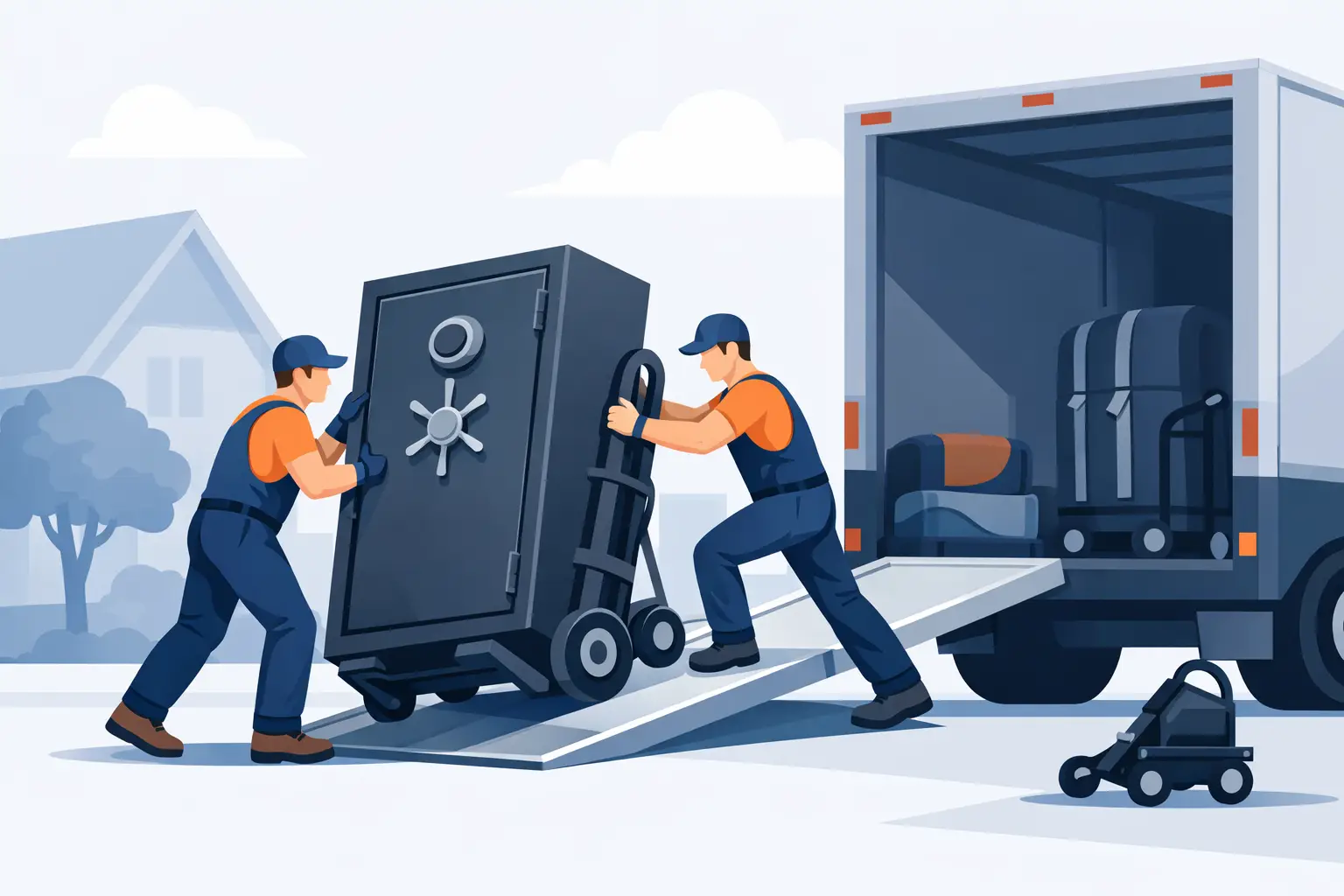
A gun safe can weigh as much as a small car engine, but it does not move like one. It is bulky, top-heavy, hard to grip, and unforgiving if it shifts the wrong way. That is why many homeowners start with a simple plan to move it themselves and quickly realize they need professional gun safe movers.
This is not just about strength. It is about protecting your floors, walls, stairs, door frames, and the safe itself while keeping everyone involved out of danger. If your safe is going from a basement in Long Island to a new home in the city, or simply being repositioned inside the same property, the right crew makes a major difference.
Why gun safe movers are different from standard movers
Most household furniture is awkward. A gun safe is awkward and concentrated. The weight sits in a tight footprint, which means a small amount of floor space carries a lot of pressure. On stairs, that pressure becomes even more difficult to control. In narrow hallways or apartment buildings, even a few inches can decide whether a move goes smoothly or turns into property damage.
Experienced gun safe movers plan around those conditions before they touch the safe. They look at entry points, stair angles, elevator access, flooring materials, and how the safe is anchored. They also account for whether the unit needs to be moved upright the entire time, which is often the safest option depending on the model.
That level of planning matters because a gun safe is not a piece you want to improvise with halfway through the job. If the path is wrong, if the equipment is wrong, or if the manpower is wrong, the risk goes up fast.
What makes moving a gun safe risky
Weight is the obvious challenge, but it is not the only one. Gun safes often have uneven balance because of door construction, internal shelving, or fireproofing materials. Some models are heavier in the front because of thick doors and locking systems. That can create a tipping hazard at exactly the wrong moment, especially during turns or stair transitions.
There is also the issue of surface protection. Hardwood floors can dent. Tile can crack. Stair noses can split. A safe that slides an inch in the wrong direction can do expensive damage before anyone has time to react.
Then there is access. New York area moves often involve tight apartment corridors, older homes with narrow staircases, exterior steps, or shared building rules. A safe may technically fit, but that does not mean it can be moved safely without the right tools and controlled handling.
How professional gun safe movers approach the job
A professional move usually starts with details. The crew needs the safe’s approximate dimensions, brand or model if available, and where it is starting and ending. Photos are often helpful because they reveal obstacles that numbers alone do not show.
From there, the move is planned around the route. That includes checking thresholds, ramps, stair count, tight corners, and vehicle access. If the safe is bolted down, that has to be addressed before transport. If the destination is upstairs or in a basement, the crew may need specialized dollies, lift equipment, skid boards, straps, and floor protection materials.
The actual move should feel controlled, not rushed. Good movers do not muscle a safe and hope for the best. They stabilize it, keep communication clear, and make deliberate adjustments through each stage. That is especially important when the path includes turns, changes in elevation, or surfaces that can shift under pressure.
When you should not try to move it yourself
There are a few situations where do-it-yourself becomes a bad bet quickly. One is stairs. Another is any move that requires getting through tight residential spaces without damaging walls or trim. A third is when you do not know the exact weight of the safe or whether it has been anchored.
You should also think twice if the safe is being moved from a finished basement, from an upper floor, or into a building with shared hallways and elevators. These are jobs where one mistake can affect not just your property, but someone else’s as well.
Even on a same-floor move, the challenge is often greater than expected. A safe can be manageable in an open garage but much harder once it has to pass through interior doorways, over transitions, and around furniture. Professional help is often cheaper than repairing damaged flooring or dealing with an injury.
What to look for when hiring gun safe movers
Not every moving company handles specialty items with the same level of experience. If you are hiring for a gun safe move, ask direct questions. Have they moved safes of similar size? Do they handle stair carries? Do they bring the right protection for floors and walls? Are they licensed and insured?
Pricing matters too, but clarity matters more. A solid quote should reflect the real conditions of the move, including access, stairs, distance, and any specialty handling needed. Very low pricing can be tempting, but if it leaves out the hard parts, you may end up paying more once the job begins.
This is one reason customers often prefer a full-service company with specialty moving experience. When a crew regularly handles heavy and sensitive items like safes, pianos, antiques, and large furniture, the process tends to be more organized from the start.
Preparing for gun safe movers before moving day
A little preparation helps the move go faster and more safely. The safe should be emptied before transport unless the mover specifically says otherwise. Removing contents reduces weight and lowers the chance of internal shifting. It is also smart to remove shelves, drawers, and other loose interior parts if the model allows it.
Make sure the path is clear. That means moving rugs, furniture, and anything fragile out of the route. If the safe is in a room with tight working space, give the crew as much access as possible. If the building has elevator reservations, loading dock requirements, or move-time restrictions, those details should be handled in advance.
You should also let the movers know if the safe is bolted down, especially if the bolts are concealed or difficult to reach. Surprises slow down the job, and with heavy items, delays usually mean added complexity.
Local moves, long-distance moves, and inside-the-home moves
Gun safe moving is not always a full relocation. Sometimes a customer is remodeling a room, replacing flooring, or changing where the safe is stored inside the home. In those cases, the challenge is less about mileage and more about careful repositioning.
Local and long-distance moves add a transportation layer. The safe needs to be loaded securely, stabilized in transit, and unloaded without the kind of jolts that can happen with poor planning. If the move is part of a larger household relocation, it helps to work with a company that can coordinate the safe along with the rest of the inventory instead of treating it like an afterthought.
For homeowners and businesses across Long Island and New York City, that coordination can save time and reduce stress. Lowlow Shipping handles specialty items as part of broader moving support, which is often the simplest option when you already have enough moving parts to manage.
The cost question people always ask
The price to move a gun safe depends on the details. Weight, size, stairs, distance, access conditions, and whether special equipment is needed all affect the quote. A ground-floor garage move is very different from carrying a large fireproof safe out of a basement with a turn in the staircase.
The best approach is to get a quote based on the actual job, not a guess. Accurate pricing is better for everyone because it sets expectations early and avoids last-minute changes. If a company asks for photos and specific measurements, that is usually a good sign. It means they are planning the move instead of just estimating it loosely.
Why experience matters more than brute force
A successful gun safe move rarely looks dramatic. It looks methodical. The crew protects surfaces, controls the weight, communicates clearly, and works the plan. That is what keeps the safe from shifting, the property from getting damaged, and the customer from dealing with an expensive problem after the truck leaves.
If you are moving a gun safe, the goal is not to find the strongest people available. It is to find movers who know how to handle one of the heaviest and most difficult items in a home with care, the right equipment, and upfront communication. That kind of move is worth doing once and doing right.