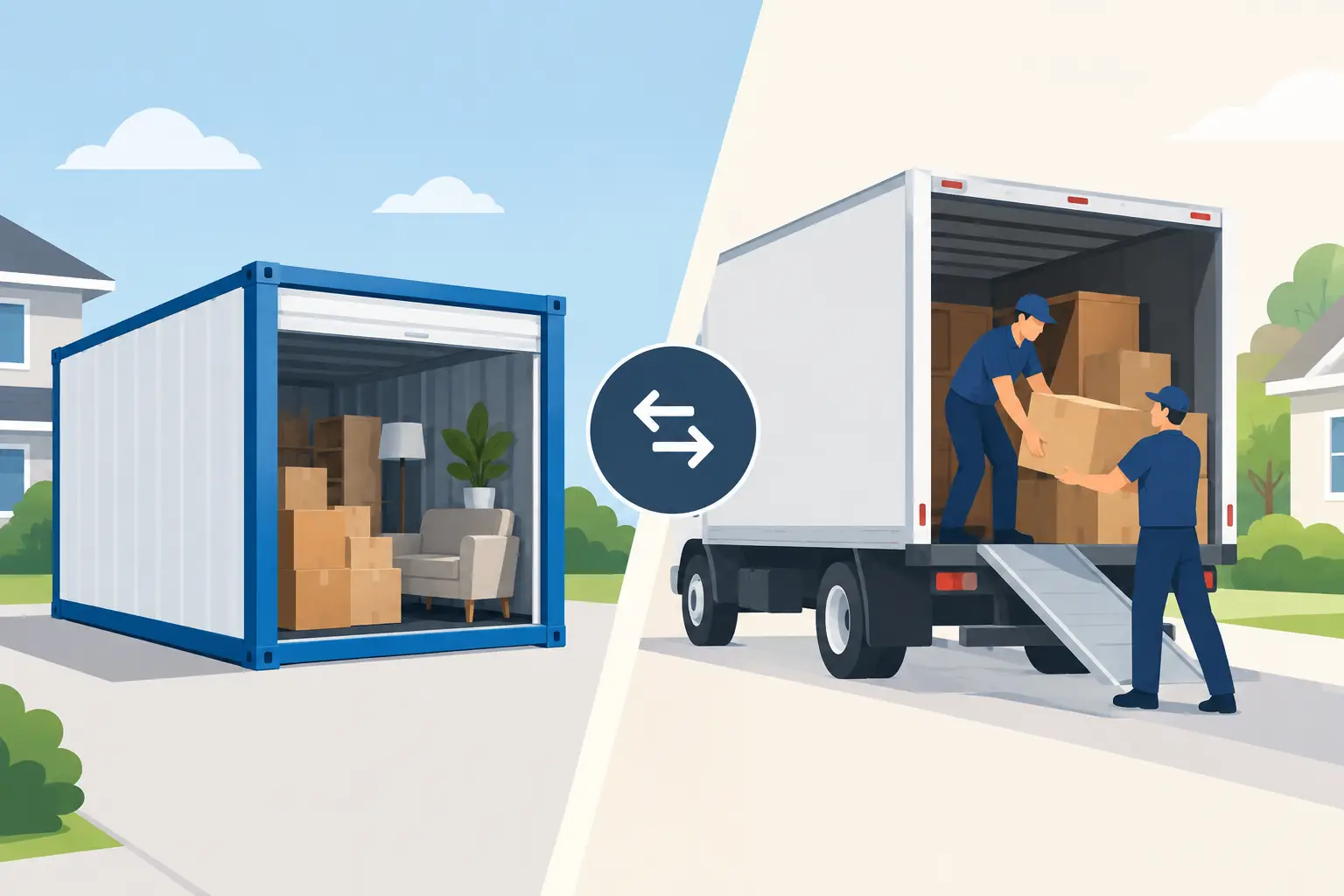
A moving container in the driveway can look like the easy answer until you remember the sofa still has to get down three flights of stairs, the building needs a certificate of insurance, and the container needs somewhere legal to sit. When weighing portable storage versus movers, the better choice comes down to more than the advertised price. Your timeline, access, amount of labor, and the items you are moving all matter.
For some moves, portable storage offers useful flexibility. For others, a professional moving crew saves time, prevents damage, and avoids the expensive surprises that come from handling a difficult move alone. Here is how to make a practical choice for a Long Island or New York City relocation.
Portable Storage Versus Movers: The Core Difference
Portable storage usually means a company delivers a container to your home, gives you time to load it, then transports it to your new address or a storage facility. You are generally responsible for packing, loading, unloading, and securing the contents unless you separately hire labor.
A full-service mover provides the truck, trained crew, equipment, and transportation. Depending on the service you select, movers can also pack boxes, disassemble furniture, wrap fragile pieces, reassemble items at delivery, and remove unwanted belongings. You have a defined moving date and a team responsible for getting the job done.
The difference is control versus support. A portable container can give you more time to work at your own pace. Movers give you more hands, more experience, and a clearer path from one home or office to the next.
When Portable Storage Makes Sense
Portable storage can be a good fit when your move has a gap between homes. Maybe your closing date changed, renovations are running late, or you are temporarily staying with family. A container lets you pack once, keep your belongings together, and arrange final delivery when the new space is ready.
It may also work well for a smaller, less complicated move with easy access. A homeowner with a private driveway, ground-floor entry, and a flexible schedule may prefer loading over several days instead of completing everything in one appointment.
This option is often appealing to people trying to spread out moving tasks. You can sort room by room, set aside donations, and avoid packing an entire household in a weekend. That extra time can reduce stress if you are organized and physically able to do the work.
However, the container itself is only one part of the cost. Delivery, pickup, monthly storage, transportation, insurance coverage, packing supplies, and hired loading help can all affect the final total. Portable storage is not automatically the lower-cost option, especially if you need it for longer than planned.
When Professional Movers Are the Better Value
Movers are often the more practical choice when time, safety, or building logistics are a concern. This is especially true for apartment moves in New York City, where elevators, loading docks, parking rules, narrow hallways, and building time windows can turn a simple move into a complicated project.
A professional crew can load a home in hours rather than days. They bring dollies, pads, straps, shrink wrap, tools, and the lifting experience needed for bulky furniture. That matters when you have a sectional sofa, heavy dressers, delicate glass, or a tight stairwell that leaves no room for trial and error.
Professional service is also valuable when the move includes specialty items. Pianos, organs, pool tables, gun safes, antiques, large artwork, and high-value furniture require more than basic strength. They need proper protection, the right equipment, and a plan for navigating doors, stairs, and turns without risking the item or the property.
For families, busy professionals, and business owners, the biggest benefit is often lost time avoided. Taking multiple days off work, asking friends to lift furniture, renting a truck, and making repeat trips may look affordable on paper. When you account for missed work, rental fees, fuel, physical strain, and possible damage, a moving crew can be the better value.
Compare the Real Costs, Not Just the Starting Price
Portable storage prices can be easy to misunderstand because the initial quote may cover only a portion of the service. Ask how long the container rental lasts, whether delivery and pickup are included, what happens if you need extra time, and whether transportation to your final location is priced separately.
You should also consider how you will load the container safely. Poor loading can lead to crushed boxes, shifting furniture, and broken belongings during transport. If you hire labor-only movers to load or unload, add that cost to your comparison. At that point, the gap between a container and full-service moving may be smaller than expected.
With movers, request a clear quote that explains what is included. Confirm the number of movers, estimated hours or flat-rate terms, travel time, packing services, specialty-item charges, stairs, elevators, and any required building paperwork. Affordable pricing matters, but clarity matters just as much. A lower quote is not helpful if essential services appear later as unexpected charges.
The fairest comparison is not container price versus truck price. Compare the complete cost of getting every item safely from its current location to its final room at the new location.
Access Can Decide the Move Before You Book
In many Long Island neighborhoods, a portable container can be placed in a driveway without much trouble. Still, measure the driveway, check overhead clearance, and make sure the delivery vehicle has room to maneuver. Homeowners associations and local rules may also limit where or how long a container can remain on the property.
In NYC, curb space is often the bigger obstacle. A container may require permits, parking coordination, or approval from the building and local authorities. Some apartment buildings will not allow containers at all, or they may only allow activity during narrow delivery hours.
Movers still need parking and building access, but an experienced local crew can coordinate around these challenges. They can work within elevator reservations, protect common areas, provide required insurance documentation, and complete the move during the building’s approved window. For a high-rise, co-op, or busy commercial location, that planning is not a minor detail. It is often what keeps the move on schedule.
Think About the Labor You Are Really Taking On
Packing boxes is only part of moving. Loading requires lifting, carrying, stacking, securing, and making quick decisions about weight distribution. Unloading repeats the process after you are already tired. Friends may be willing to help, but they may not know how to move a mattress through a stairwell or protect a wood table from scratches.
A portable container can still work if you want flexibility but not the heavy lifting. You can arrange professional labor for loading and unloading while keeping the storage container for the in-between period. This hybrid approach is useful when your dates are uncertain, but it requires good coordination between the container company and the moving crew.
A full-service move is usually simpler when you want one accountable team. Lowlow Shipping Inc can handle packing, loading, transport, storage coordination, and specialty handling, so you are not left managing several vendors during an already busy transition.
Choose Based on Your Timeline and Your Belongings
Portable storage is best for a flexible, self-managed move with adequate space for the container and no urgent need to finish in one day. It can be helpful during renovations, delayed closings, or temporary housing situations.
Movers are generally the better fit for deadline-driven moves, apartments with building restrictions, long-distance relocations, offices, and homes with heavy or fragile items. They are also the right call when you want your belongings packed and handled with care instead of relying on a rushed DIY effort.
Before deciding, walk through your move from start to finish. Consider where the container or truck will park, who will do the lifting, how long you need storage, what your building requires, and which items would be costly or difficult to replace. The best moving plan is the one that protects your time, your property, and your peace of mind when moving day arrives.