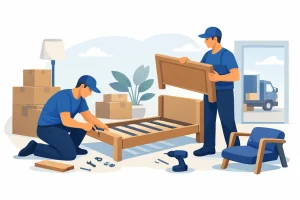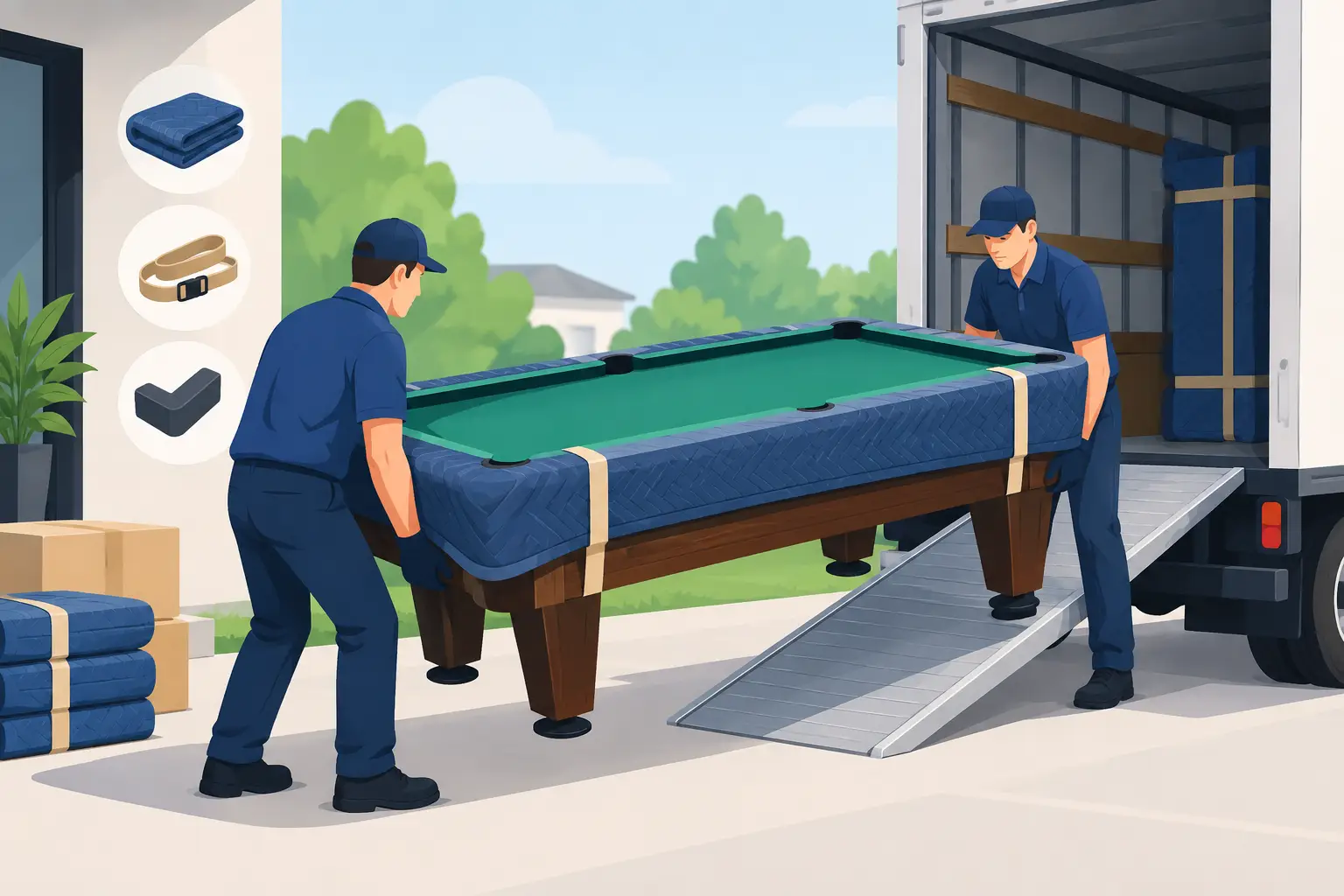
A pool table may look like one solid piece of furniture, but it is really a heavy frame supporting a precisely leveled playing surface. That is why learning how to transport pool tables starts with respecting the slate. A rushed move can crack the surface, bend rails, lose hardware, or leave the table impossible to level correctly in its new room.
For most homeowners, renters, and businesses, this is not a good item to drag through a doorway or load into a pickup truck in one piece. Pool table moving requires planning, the right protection, enough trained hands, and a realistic understanding of what the stairs, elevators, hallways, and destination space will allow.
Why Pool Tables Need Special Handling
The biggest concern is slate. Many traditional pool tables have one-piece or three-piece slate beds. Slate is dense, brittle, and exceptionally heavy. Depending on the table’s size and construction, the slate alone can weigh several hundred pounds. A full-size table can easily weigh 700 to 1,000 pounds or more.
The table’s wooden cabinet, legs, rails, pockets, and felt also need careful treatment. Even if the slate survives, a damaged rail or torn cloth can affect play and lead to avoidable repair costs. The goal is not simply getting the table from Point A to Point B. It is getting every component there protected, organized, and ready for proper reassembly.
Moving a small coin-operated or bar-style table can involve a different process than moving a home billiards table. Antique tables, custom tables, and oversized tournament tables may need additional care because replacement parts are difficult to find. If you are unsure of the construction, treat the move as a specialty job rather than guessing.
How to Transport Pool Tables Step by Step
Measure the route before taking anything apart
Start by measuring the pool table, the doorways, stairwells, elevator openings, turns in the hallway, and the new room. Do this at both locations. A table that fit into the original room may not fit through the exit route without disassembly.
Also inspect the destination floor. A heavy table should sit on a stable, level surface. If it is going upstairs, into a basement, or into a high-rise apartment, let the moving team know before moving day. Those details affect labor, equipment, timing, and the safest path through the property.
Clear rugs, décor, loose furniture, and anything that narrows the route. It is far easier to prepare a clean path than to stop midway through a carry because a corner is blocked.
Document the table and remove accessories
Take clear photos of the table from all sides before work begins. Photograph the rail layout, pocket style, leg connections, and any existing scratches or marks. These photos are helpful references during reassembly and provide a record of the table’s condition.
Remove balls, cues, racks, lights, covers, and other accessories. Pack balls in a sturdy, padded box so they cannot shift around in transit. Cue sticks should be placed in a cue case or wrapped separately to prevent warping or damage.
If the table has a ball-return system, label or photograph its pieces as they come apart. Small parts can be easy to misplace, particularly during a larger home or office move.
Disassemble the table in the right order
A standard pool table is usually disassembled by removing the pockets, rails, felt, slate, frame components, and legs. The exact order depends on the model, so avoid forcing parts that do not release easily.
Rails are often held in place by bolts accessed from beneath the table. Keep each type of hardware in a labeled bag, and tape that bag to the matching component when possible. Do not place loose bolts in a general box with unrelated moving supplies. A missing bolt can turn reassembly into an expensive delay.
The felt should be removed carefully if it will be reused. Depending on whether it is glued or stapled, removal may require different tools and techniques. Older felt, worn cloth, or cloth that is already stretched may not reinstall well. This can be a good time to decide whether new felt makes more sense after the move.
Protect the slate first
Slate should be handled vertically on edge, not laid flat across an unsupported surface where it can flex. Each piece needs moving blankets, padded corners, and a secure upright position in the truck. Never stack heavy items on slate, and do not let it slide against metal, wood, or other hard cargo.
Three-piece slate must be labeled so each section returns to its original position. Mark the underside only, using a removable method that will not affect the playing surface. Keep seams clean and protected from chips.
A one-piece slate table can be especially difficult because the slab is large and awkward. It may require several experienced movers and specialized equipment. This is one situation where attempting a DIY move can create a real injury risk along with a risk of breaking the slate.
Wrap the frame, rails, and legs separately
Use moving blankets and stretch wrap to protect finished wood, metal accents, and delicate corners. Wrap rails individually, especially if they have leather pockets or decorative details. Separate legs from the cabinet when the table design allows it, and protect them from rubbing against one another.
Do not use tape directly on finished wood, felt, or leather. Adhesive can leave residue or pull away a finish. The wrap should hold the padding in place without becoming part of the table.
Load with weight distribution in mind
A moving truck should be loaded so the slate is upright, padded, and secured against a solid wall or other stable surface. Use straps to prevent movement during braking, turns, and uneven road conditions. The frame and rails can be loaded nearby, but they should not press into the slate.
Avoid placing the pool table components under household boxes, appliances, or furniture. The truck should be packed around the table with enough protection to prevent shifting. If the move includes storage, make sure the slate remains upright and dry, with no heavy items leaning into it over time.
Reassembly Is Where Precision Matters
Getting the table into the new room is only part of the job. Reassembly requires the frame to be positioned correctly, the legs to be stable, and the slate to be leveled across the entire playing surface.
For three-piece slate, the seams need to align properly before they are filled and finished. The installer then levels the table in multiple directions, not just from one end to the other. Even a small error can cause balls to roll unpredictably and make the table frustrating to use.
The cloth is installed after the slate is set. It needs even tension with no wrinkles, loose spots, or pulled edges. Rails and pockets are reattached last, followed by a final check of the table’s stability and play.
Do not judge level by eye. A table can look perfectly straight while still being off enough to affect the game. Professional leveling tools and experience make a noticeable difference.
When to Hire Professional Pool Table Movers
Professional help is the safer choice when a table has slate, the route includes stairs, the table is antique or high-value, or the move involves tight New York City apartment access. It also makes sense when the pool table is part of a larger relocation and you want one coordinated team handling packing, loading, transport, and setup.
Lowlow Shipping Inc can coordinate specialty pool table handling as part of a local or long-distance move, with trained crews, protective materials, and upfront planning for difficult access conditions. Sharing the table size, photos, addresses, floor numbers, and any elevator or stair details helps create a more accurate quote and prevents surprises on moving day.
A lower price is not always a lower cost if it leads to broken slate, damaged walls, or a table that needs professional repair afterward. Ask whether the team is licensed and insured, whether disassembly and reassembly are included, and how the slate will be protected in transit.
A pool table is built for years of games, gatherings, and competition. Give its move the same care you would give the table itself, and it can be ready for the next break shot in its new home.