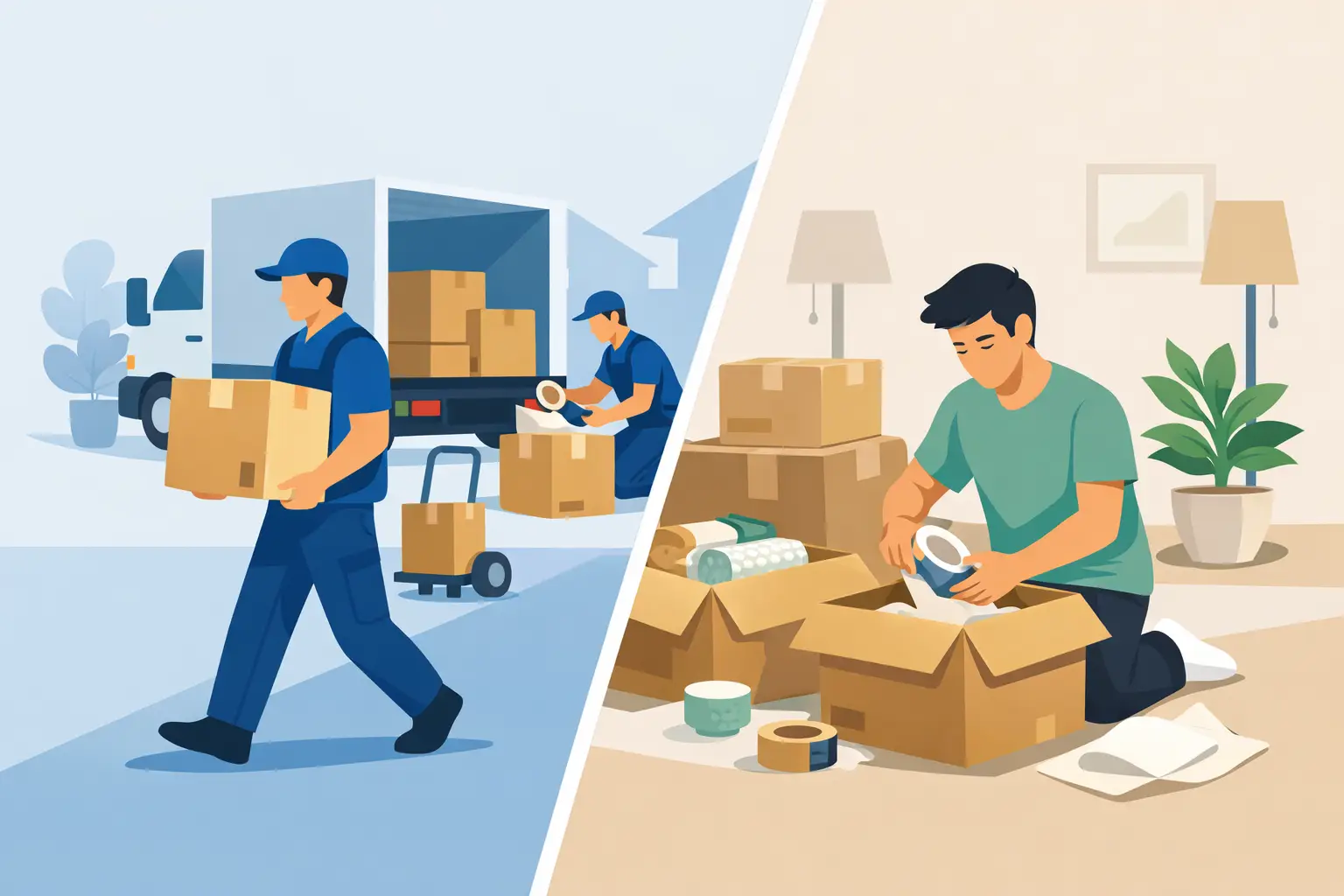
The moving truck is booked, keys are changing hands, and the calendar is suddenly moving faster than you are. The decision between packing services vs self packing can shape nearly every part of your move: your budget, your schedule, the condition of your belongings, and how stressful moving day feels. There is no one right answer for every household. The best choice depends on what you are moving, how much time you have, and where you need help most.
Packing Services vs Self Packing: The Real Difference
Self packing means you purchase or collect supplies, sort through every room, wrap and box your belongings, label cartons, and prepare furniture for transport. You control the process from start to finish. For a small studio move or a move planned well in advance, that control can be a practical way to keep costs down.
Professional packing services put an experienced crew in charge of the preparation. Movers bring the appropriate boxes and materials, protect furniture, pack fragile items, label cartons, and load everything with a clear plan. Full-service packing can cover the entire home, while partial packing focuses on the rooms or items that need the most attention.
The difference is not simply who puts items in boxes. It is about time, material quality, packing technique, and accountability. A properly packed box is easier to carry, more stable in the truck, and less likely to create a surprise when you unpack.
When Self Packing Makes Sense
Self packing is often a good fit when you have a manageable amount of belongings and enough lead time to work room by room. It can also be a comfortable option for people who prefer to personally sort sentimental items, paperwork, clothing, and everyday household goods.
The biggest advantage is the upfront savings. You are paying for boxes, tape, paper, padding, and your own time rather than professional labor. That can work well if you start early and avoid last-minute supply runs or rushed packing decisions.
Self packing requires more organization than many people expect. A two-bedroom apartment can contain hundreds of individual items, from kitchen tools and cables to framed photos, linens, and cleaning supplies. Packing after work for a few nights may seem realistic until you reach the kitchen, closets, storage areas, and items you use every day.
It is also important to pack for transportation, not just for storage. Boxes should be sturdy, filled without being overloaded, and sealed securely. Heavy items belong in smaller cartons. Fragile items need wrapping and separation. Every box should be labeled by room and contents so unloading and unpacking do not become a guessing game.
When Professional Packing Is Worth It
Packing services are especially valuable when time is tight or the move is more complicated than it first appears. If you are closing on a home, coordinating an apartment elevator, managing children, starting a new job, or moving an office, packing can become the task that delays everything else.
A professional crew can often complete in hours what might take a household several days or weekends. That speed matters in New York City and Long Island moves, where building rules, parking restrictions, move-out deadlines, and limited access windows can leave little room for delays.
Professional packing is also a strong choice for fragile, oversized, or high-value belongings. Glassware, mirrors, artwork, antiques, electronics, chandeliers, and fine furniture need more than a box and a roll of tape. They need the right wrapping materials, appropriate cartons, and careful loading. Specialty items such as pianos, pool tables, gun safes, and large art pieces should be handled by movers with the equipment and experience to protect both the item and the property around it.
For many customers, the greatest value is peace of mind. Rather than wondering whether every dish is protected or whether the boxes will hold up, you can focus on your address change, utilities, school arrangements, and the details of settling into the new place.
The Cost Question: What Are You Really Saving?
Self packing usually costs less at the beginning, but the total cost deserves an honest look. In addition to boxes and tape, most moves require packing paper, bubble wrap, mattress bags, wardrobe boxes, stretch wrap, labels, markers, and sometimes specialty cartons. Buying too little can mean repeat trips to the store. Buying too much leaves you with supplies you may not use again.
Then there is the value of your time. If packing takes several evenings, a full weekend, or time away from work, the savings may not feel as significant. Rushed self packing can also lead to damaged belongings, broken boxes, and an unorganized unload that takes longer to resolve at the new home.
Professional packing adds labor and materials to the moving estimate, but it can reduce hidden costs. Experienced packers use supplies efficiently, work quickly, and prepare items for the conditions of a moving truck. Ask for upfront pricing that clearly explains what is included, whether materials are part of the quote, and whether you are choosing full or partial packing.
At Lowlow Shipping Inc, customers can choose packing support based on the move rather than paying for more service than they need. That may mean full-home packing, help with only the kitchen and fragile items, or labor for loading boxes you packed yourself.
A Hybrid Plan Often Delivers the Best Value
You do not have to choose all or nothing. A hybrid packing plan gives you control over the simple, personal items while bringing in professionals for the high-risk or time-consuming work.
For example, you may pack clothing, books, linens, and personal files yourself. Professional packers can handle dishes, glassware, wall art, mirrors, electronics, large furniture, and any item that needs custom protection. This approach can protect the parts of the move where mistakes are most expensive while keeping the overall budget in check.
It is also a practical option for families. Parents can pack children’s essentials and familiar belongings themselves, while the moving team handles the bulk of the household. For an office move, staff can pack desk contents and confidential materials while trained movers prepare furniture, computers, and shared equipment.
Questions to Ask Before You Decide
Start with your timeline. If your move is less than two weeks away and packing has barely begun, professional support may prevent a stressful final stretch. Next, look closely at the items in your home. A collection of books and clothing is very different from a home with crystal, antiques, original art, or bulky specialty equipment.
Consider your physical capacity as well. Packing involves repeated lifting, bending, carrying, and working on your feet. Loading poorly packed boxes can make moving day slower and less safe. If you are recovering from an injury, caring for young children, or balancing a demanding work schedule, the practical value of help increases quickly.
Finally, think about how organized you want arrival day to be. Clear labels and well-packed room-by-room cartons make it easier for movers to place boxes correctly and for you to find essentials on the first night. Whether you pack yourself or hire help, keep medications, important documents, chargers, valuables, and a few days of basic necessities with you.
How to Get Better Results With Either Option
If you self pack, begin with rooms and items you use least. Use small boxes for books and dense items, and avoid making any carton too heavy to lift comfortably. Fill empty spaces so contents do not shift, but do not force lids shut. Label at least two sides of each box with the destination room and a brief description.
If you hire packers, walk through the home before work begins and point out items that need extra attention. Tell the crew what you are taking, what is staying, and which boxes should be opened first. Be clear about fragile belongings, sentimental items, building requirements, and any furniture that needs disassembly or assembly.
The right packing choice should make your move easier, not add another problem to solve. If your time is limited or your belongings need careful protection, getting help with the hardest rooms can be one of the smartest decisions you make before moving day.