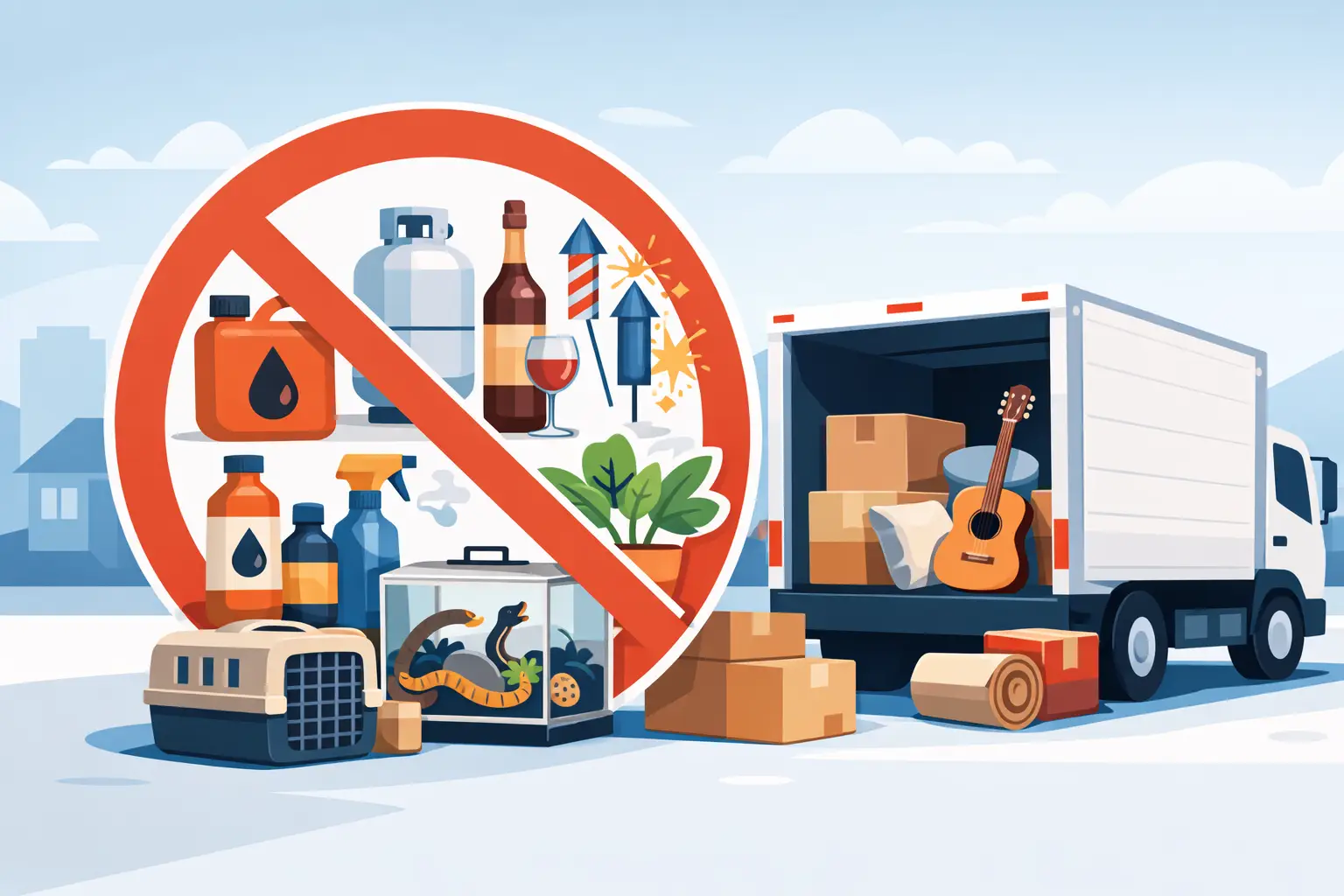
A moving crew can handle heavy furniture, packed boxes, fragile artwork, and difficult stairs. But knowing what movers cannot transport is just as useful as knowing what they can carry. A restricted item discovered on moving day can slow down the crew, create a safety risk, and leave you scrambling to find another solution.
Most restrictions are not arbitrary. Moving trucks are shared workspaces, often travel long distances, and may carry belongings from several households. Federal transportation rules, insurance requirements, fire risks, and basic safety all affect what can go on the truck. The best time to sort these items is while you are packing, not when the truck is parked outside.
What Movers Cannot Transport and Why
Moving companies may have slightly different policies, but the most common restricted items fall into a few clear categories: hazardous materials, perishable goods, living things, and valuables or irreplaceable documents. Some items are prohibited entirely. Others may be moved only when they are properly prepared, disclosed in advance, or handled by a specialty provider.
Flammable, explosive, and hazardous materials
This is the category that causes the most surprises. Movers generally cannot transport anything that could leak, ignite, corrode, or react during transit. A truck can get hot, shift over rough roads, and travel through tunnels, highways, or dense city traffic. Even a small spill can damage other customers’ belongings and create a serious danger for the crew.
Common examples include gasoline, propane tanks, lighter fluid, fireworks, ammunition, paint thinner, solvents, pool chemicals, pesticides, and certain cleaning products. Fuel-powered equipment such as lawn mowers, snow blowers, generators, and motorcycles may require special preparation, including draining fuel and disconnecting batteries. Do not assume an item is safe because it is sealed or only partly full.
Lithium batteries also require attention. Small household batteries packed securely may be acceptable under some circumstances, while damaged, swollen, loose, or high-capacity batteries can be a problem. Tell your move coordinator about e-bikes, scooters, power tools, backup batteries, and similar equipment before moving day so there are no last-minute questions.
Perishable food and open liquids
A local move gives you more flexibility than a long-distance move, but perishable food is still usually a poor fit for a moving truck. Refrigerated and frozen items can spoil quickly, leak into boxes, attract pests, and leave odors behind. Open containers are also likely to spill when boxes are stacked or shifted.
For a short move within Long Island or New York City, you may be able to carry a small cooler of food in your own vehicle. For a longer relocation, plan to use, donate, or discard refrigerated, frozen, and opened pantry items before moving day. Unopened canned and dry goods are generally easier to pack, provided they are secured in appropriately sized boxes.
Liquids depend on what they are. Sealed shampoo, lotion, or cooking oil may be acceptable for some moves, but they should be packed upright in leak-resistant bags and clearly separated from items that could be damaged. Hazardous liquids are different and should never be packed without checking first.
Pets, plants, and other living things
Professional movers do not transport pets. Your dog, cat, bird, reptile, or fish needs climate control, regular attention, and a travel plan that fits its needs. Keep pets with you whenever possible, and arrange for a veterinarian, pet sitter, or pet transport provider if the trip is more complicated.
Plants can be restricted as well, especially on interstate moves. They can carry insects or soil-related pests, and extreme temperatures in a truck can damage them. A hardy houseplant may survive a short local trip in your personal vehicle, but delicate plants, large outdoor planters, and interstate moves need extra planning. Check the rules for your destination state before assuming plants can cross state lines.
Cash, documents, medications, and sentimental valuables
Movers are licensed and insured, but some belongings should still remain in your possession. Cash, jewelry, prescription medication, passports, birth certificates, financial records, keys, laptops, and personal electronics are best carried with you. This is less about distrust and more about control. You may need these items immediately, and they are difficult or impossible to replace if a box goes missing.
The same applies to irreplaceable photos, family heirlooms, small collections, and anything with deep sentimental value. For high-value art, antiques, and other specialty pieces, professional transport may be available, but the item needs to be declared in advance. Proper crating, wrapping, valuation coverage, and handling instructions make a major difference.
Firearms and other regulated items
Firearms, ammunition, and regulated weapons require a separate conversation before your move. Ammunition is commonly prohibited because it is explosive. Firearm policies vary by moving company, route, and destination, while state and local laws can be especially strict in the New York area.
Never pack these items into a box without discussing them with your mover and reviewing the laws that apply to your move. In many cases, the owner should transport legally owned firearms personally and ensure they are unloaded, secured, and compliant with every jurisdiction along the route.
Items That May Be Transported With Advance Planning
Not every difficult item is off-limits. Large, fragile, heavy, or unusually shaped belongings often need additional planning rather than automatic exclusion. Pianos, organs, gun safes, pool tables, oversized furniture, fine art, and antiques can usually be moved by trained professionals using the right equipment and protection.
The difference is preparation. Your moving company needs accurate details about the item, its weight or dimensions, access at both locations, and any stairs, elevators, tight turns, or parking limitations. A piano move from a ground-floor home is very different from moving one out of a fifth-floor walk-up. Likewise, an office safe may require specialized equipment and building approval.
If an item needs disassembly, professional crating, climate-sensitive handling, or a separate delivery schedule, address it when requesting your quote. Lowlow Shipping Inc can coordinate specialty handling for many challenging items, but advance notice allows the crew to bring the right people, materials, and equipment.
How to Prepare Restricted Items Before Moving Day
Start with one box-by-box review of your garage, basement, shed, kitchen, and utility closets. These spaces tend to hold the items people forget about: old paint cans, spare propane cylinders, automotive fluids, chemicals, partially used cleaners, and battery-powered tools.
For hazardous materials, use local household hazardous-waste programs, recycling centers, or retailer take-back programs when available. Never pour chemicals down a drain, toss fuel containers into regular trash, or leave them at the curb without confirming local disposal requirements. Apartment residents should also check building rules for bulk disposal and recycling pickup.
Create a separate personal travel bag for documents, medicine, chargers, valuables, and a few days of essentials. If your move involves pets or plants, make those arrangements early. New York moving days are busy enough without trying to find a last-minute pet carrier or a place to dispose of old paint.
Finally, be direct with your moving coordinator. Share photos of unusual items, mention anything powered by fuel or batteries, and ask questions before packing it. A clear answer ahead of time is far more affordable and less stressful than a truck-side surprise.
A good move is not about forcing every possession onto one truck. It is about making smart decisions before moving day, protecting your belongings, and giving your crew the information they need to do the job safely.